Subtext and Subterfuge

Entitlement and Privlege

Entitlement and Privlege

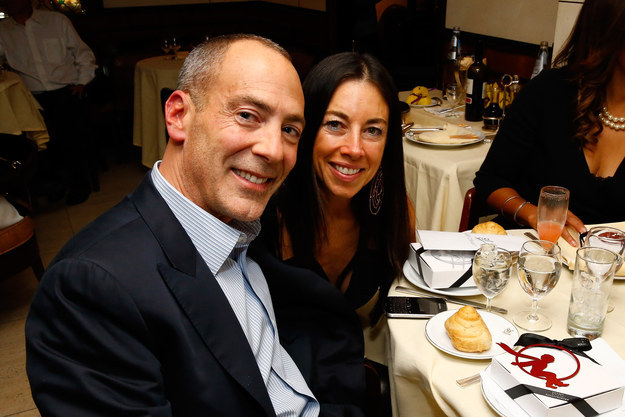
This is what entitlement looks like.  Let’s look up the definition: the state or condition of being entitled to benefits.  Oftentimes, those who live in the upper class don’t want to acknowledge the monetary gap and call those who are poor entitled because they want access to food stamps and free healthcare.   They feel they can espouse these ‘truths’ because they THINK they have worked hard to reach where they are and don’t understand how others can’t reach their same level, even if they never spent a day working and were born into their riches.  This man is actually a slumlord and lied to get a 45 million-dollar loan.  He then passes this sense of entitlement on to his son, who goes on to berate an Uber driver based on the fact that he is rich and the driver is not.  Why?  Because it fosters their beliefs that they are entitled to their monetary gains and social status.  Because of their social status, they are granted entry into prestigious institutions and private clubs.  Because they are granted entry, they then feel a certain elitism and deride the poor for being poor.

This provides for class warfare, where the poor are made to believe they just need to work harder to achieve the status of their compatriots, never realizing these very people were given breaks to reach where they are.  In this case, this man completely fabricated his earnings to receive benefits he wasn’t entitled to, and yet a blue-collar worker is told to ‘pull yourself up by your bootstraps.’  This is a double trap for poverty-stricken minorities, because they then are questioned as to why they can’t overcome being poor and being a minority to reach the status of the elite.  It divides the class war into a race war and those who are entitled to white privileges do not understand what privileges they live with everyday to maintain their status.

What is white privilege?  You can see the divide between the classes, but some who are white cannot see their privilege.  This is because they are already benefiting from them and take it for granted.  If they were to see it from a minority point of view, they will see that they are not the norm.  When you are the minority, people question if you are really American, if you speak English, and why you are at a predominantly white establishment.  You get stares and questions that constantly remind you that you do not belong.  Band-Aids are skin-colored, but are they made for Black people?  If you are white, you probably never had to think about that because they were simply Band-Aids.  And you might think that these are minor points, but soon enough, all these minor points add up and it becomes major issues that bar minorities from higher education and possible careers.

How do you  fix such a system?  We can start by acknowledging that such a system exists and can be fixed.  Those who hold money and power will continue to feed lies to the lower classes to have them believe they need to work harder so they won’t revolt and begrudge them their riches.  They will also divide the lower classes into races so they will fight among themselves.  When the poorest of the poor are denied access to basic necessities, none of us prosper.  When we learn that we can only benefit from helping the neediest of our society, will we grow as a people.  If everyone is given access and education, they will find cures that we never thought of because their potentials will finally be released.  There is a revolution coming and those who fear it will do anything to stop change, but change is about ideas and not about tearing down physical walls.  When you tear down mental barriers, everything else will come crashing down.

The importance of Folklore

uncleboonmee

I believe all myths and folklore has some root in reality.  They range from the completely made up Loch Ness Monster to the delusionally-fueled Mermaids.  One origin of mermaids dates to when sailors mistook manatees for half human sirens calling to them.  Is it so preposterous then to believe other myths whose origin may spring from more likely sources?  In Southeast Asian cultures, many ethnic groups have stories of a Bigfoot-like creature who roamed the forests.  In Hmong culture, I grew up with dreams of Mahlews, giant, lumbering creatures that loomed in our imagination.  There is proof such an animal lived alongside humans thousands of years ago, but became extinct.  Perhaps, this ancestral memory of them has been passed down from generation to generation until it has become folklore instead of truth.

There has been evidence a creature called Gigantopithecus existed in southern China, Vietnam, and India, but went extinct 300,000 years ago.  Researchers estimate it stood more than 10 feet tall and weighed 1,200 pounds. ‘Scientists first learned of Gigantopithecus in 1935, when Ralph von Koenigswald, a German paleoanthropologist, walked into a pharmacy in Hong Kong and found an unusually large primate molar for sale.’ (1)  Since then, scientists have unearthed other bone fragments and continue to study them, but I feel they are not researching the history of the people who may have seen these creatures.

Hmong people originated in southern China and emigrated to the mountainous regions of Laos, close to Vietnam.  Thus, they would be greatly advantaged to have seen these beings in the past and have an oral history of them.  They are also featured as supernatural beings in a Thai-directed movie Uncle Boonmee Who Could Recall His Past Lives, showing how they permeate our cultures in different ways.  I have heard stories of these creatures along with many other fanciful beings all my life that I saw them all as characters from imaginative storytelling.  It’s hard to separate fact from fiction, but can it be that fact is so removed from time that it has now morphed into a fictionalized fact that is indistinguishable from fiction?

If this is the case, we shouldn’t be so quick to discount other folklore and explore them more thoroughly.  There is proof they existed when humans also did, so does this mean that when I am hearing about Mahlews, it is preserved ancestral knowledge passed down over the generations?  Obviously, no one has seen one in thousands of years, but perhaps our ancestors did and the knowledge is still with us today.  It certainly forces you to think that you shouldn’t be so quick to discount the basis of such folklore.  Folklore itself is precarious ground, but when you find such evidence as this to back it up, it makes quite a case for itself.

1.       http://www.smithsonianmag.com/science-nature/did-bigfoot-really-exist-how-gigantopithecus-became-extinct-16649201/?no-ist

2.       https://en.wikipedia.org/wiki/Gigantopithecus

3.       http://www.prehistoric-wildlife.com/species/g/gigantopithecus.html

4. picture from Uncle Boonmee who can recall his past lives

Survivor Viewer Guilt

worried-girl-413690__180

Have you noticed comments on online forums where people question how the victim of a crime became victimized?  Over the past years I’ve seen quite a few instances where online comments ask why a woman wasn’t careful enough before she was raped.  It’s become common place now to ask why did she go with him?   Didn’t she know this was a bad decision?  Why was she drinking so much at night?  This is different than speculation on the actual events.  You can dispute the validity of events, but people should be wary of blaming the victim by asking why they didn’t place the onus on themselves to prevent their own victimization.  I call this survivor viewer guilt, because they are not directly involved in the crime, but feel as if they need to interject their own comments after the fact.

This happens often in online communities and I feel it is something new that must be addressed.  Why do people feel as if they need to victim-blame someone they never even met or were involved with?  I don’t believe it is out of malice but because they feel personally guilty.  I call this survivor viewer guilt.  We’ve all heard of survivor guilt, where a survivor of a crime feels guilty they are alive when someone else died.  Survivor viewer guilt exists because as humans, we instinctively want to protect the victim we hear about even if there was no possible way to do so.  Because we failed to protect them (even though we may have never known them), we feel survivor viewer guilt and project this guilt onto the victim to relieve ourselves of it.  We ask why the victim didn’t do more because of our guilt.

As humans, we will always have these protective feelings and they are what separate us from sociopaths, so it is okay to feel such way.  However, when you recognize what is happening, you must stop the transference unto the victim.  When we better understand the nature of our actions, we will understand who we are.  Crime will continue to happen, but we can stop the further victimization of those accosted by changing the way we speak to each other.  We must acknowledge we feel guilty, but also acknowledge there was absolutely nothing we could do and that we still want the best for the victim we are hearing about.

The ‘F’ Word

The Last Sleep

woman-918981__180

What is it to peer beyond the known? Do you dare even dream of what may come after all the pages are written? Death surrounds us always, a reminder of how fragile and precarious our lives are. Does it come like a soft dream that envelopes you in your sleep and then snares your soul? Does it strike suddenly like jagged lightening claiming and splitting a tree in two in the dark of the night? I’ve known of death, but I have never actually thought about it because it is something far off: something to be reckoned with in old age. It is not the young man’s racket. It has slowly seeped into my conscious as of late when I wonder what happens after we die.

I imagine complete darkness and a stillness that swallows echoes whole. A darkness that stretches forever covering the hills and the stars in syrupy ink that stains your hands. There is no more me and there is no more you in this void. All the pain of life washes away, but with the pain goes the moments of exquisite joy, for joy tastes the sweetest after the throes of agony and suffering. The nothingness strikes fear in me as my soul aches, as if it remembers existing in this plane before. If you believe in reincarnation, death is merely a way station between this life and the next. If you believe in heaven, you will ascend to the promised land above. If you are an atheist, the nothing awaits you.

I would plead with God to not send me again because life can be so cruel, but that is not up to me. If there is a heaven, I do not know if I would want to reside there. If there is no God, then I return to nothing. Whatever your beliefs, we will all return to nothing eventually. If there is an end, there was once a beginning. If there is a beginning, there will be an end. Eternity only exits in a loop. As such, humans were once nothing and we will return to nothing. One day, we will all die out and no one will exist to even remember our kind. That is the nature of physical life, but I choose to believe in the existence of a soul: the breath of who we are. All we can do is live our physical lives to the fullest, but also remember to nurture our soul. So it goes.

What does denial look like?

What does denial look like from the outside? I can see it in the hooded eyes of my friends who can’t speak of a past trauma because they can’t bring themselves to confront it. Denial refuses to be bottled up and it spills over into other parts of our lives where we drink too much, cut ourselves too much, use our bodies too much, and degrade who we are a little too much. From the outside, most of us can’t even identify what denial looks like. We can only recognize the symptoms of denial and surmise that if someone keeps making bad decisions in their lives that harm them, they must be a whore, an alcoholic, or a cutter while not realizing the core of where this self-harm is coming from. They are hurting deeply inside perhaps because they can’t acknowledge that their mother died, that their significant other is cheating on them, or that they are miserable where they are. If we only address what we can see, we’ll never get to the root of the cause. This is denial. We wrap ourselves in self-harming tactics so that our closest friends and family can’t see the hurt we carry under all the layers.

How does denial look like from the inside? I was in a four-year relationship that I mentally knew wasn’t working, but I was also very stubborn and refused to admit defeat. I had the fresh memory of a recently failed relationship on my mind and I wanted to prove to myself and others that I could make one work, so I felt determined to keep going even when I was miserable. I felt isolated, depressed, and was at the heaviest point of my life because I ate my feelings. Everyone chooses a different poison to deal with their denial, and mine was gambling. This was a safe alternative because it wasn’t as obvious as drinking myself into oblivion. However, I realized it was an issue when I went to the casino more times than I did in the past. What do these poisons we pick do for us? It numbs the mountain of pain we hold for just for a moment. Just for a moment, you feel nothing, and nothing is better than feeling the pain of what is weighing you down.

Finally, I realized I just wasn’t happy and decided to do something about it, but I know some friends who have continued to live in denial for most of their lives. At first, it is an essential coping mechanism to get you through, but when it starts to eat your soul alive, you become your pain and it owns you. If we don’t confront these traumas, they will replay themselves over and over again in our lives like a ghostly reminder of our past. So what do we do when it’s not us that is in denial but our friend? It is extremely painful to watch them go through this, but do not address what you see because they are merely the symptoms of the underlying issue. Most of the times, we have no idea what it is. Instead, ask them what they are holding on to or let them know that whatever they are holding on to, you can see the hurt in their eyes. Sometimes, the person will not listen and spiral down deeper. It is okay to accept defeat and leave their side because it pains us to watch them. You will be there when they get back to who they are. This doesn’t make you a bad friend. It just means you are emotionally exhausted from this relationship and need to pull back for yourself.

The fact that you can accept defeat makes you a healthy person, for I realize now that is what I needed to admit in my relationship, but was too stubborn to. We abhor failure and because of this, we keep up the semblance of success even when everyone around us sees that we are drowning in a sea of our excuses. If you never accept defeat or failure, you can never move on past your trauma. Failure means acknowledging we are not perfect and yet, we can still continue on. If we don’t accept failure, we are forever trapped in denial. Your relationship didn’t work not because you didn’t try, but because you valued the relationship over yourself. You can’t get over your mother’s death because you feel cheated, but realize that some people never had a mother. Some people have mothers and wish they never knew them. At least you had a mother you loved for a short period of time. No one can change your life except for you. Someone may be able to throw you a life line, but only you can climb that rope.

Accepting who you are

It took me a long time to accept who I am. I never thought I was pretty. I always saw myself as an outsider as I was Asian in a sea of Caucasian faces. Worse, I was shy and very slow to leave my shell. It was easier to stay in the periphery, where I was safe. I’m also one of those lucky ones who are socially awkward and don’t always understand the rules of social engagement as my parents sheltered me from outsiders and my peers. I tell my boyfriend I was forced to be a nerd because I had nothing to do but stay inside to read and watch Star Trek. He was a nerd by choice. I was a late bloomer and didn’t start dating until my twenties. I didn’t realize I needed to be social until I was about 24 or 25. I realized that if I wanted to succeed in this world, I would need to interact with it. If I wanted to interact with it, I needed to learn their rules and social etiquettes. I am by no means a social butterfly now at 33, but I am a much different girl than when I was at 24.

I noticed that those who were successful were extremely confident in who they were, and this was the only difference between someone who was social and someone who wasn’t. There wasn’t anything I was lacking except for this one area. What makes someone confident? The ability to believe in themselves. What happens when you live in a society where the media and those around you constantly remind you that you are not beautiful, that you are not what they are looking for? What happens when you’re afraid to even search for those answers? I was a cloistered girl who didn’t know how to view myself, and I think a lot of girls find themselves in this position when they are just starting to find themselves.

Little by little, I learned to accept myself for every perceived flaw I had. This was completely an internal process that I created to heal myself. I was reading comments on the internet about this great, older guy who was so positive and many people asked why they didn’t have a person like that in their lives. The reality is that you need to be that person to yourself. Boom! I bet your mind was blown. No? Then continue reading. I realized what my parents had been telling all these years about surrounding yourself with positive people, because positive people will propel you up only, and the person that has to be the most positive is me. Now, don’t get me wrong, I’m extremely sarcastic and really own my resting bitch face, but I’m extremely positive towards myself even though I may not look like it. If someone tells me to smile one more time, I will cut you.

I forgave myself for the past and let it go. I accepted my life for what I had and didn’t have. I learned to love myself. Now that may sound like some bs, but I would definitely hang out with myself. I would date myself. I am proud of who I’ve become and continue to be. Once I let go of things that were in the past, I worked on the present. I smashed all my mental barriers. As a woman, I own my sexuality and embrace how my mind works. As a woman, we tend to overthink and think of everyone in situations. This has allowed me to enhance my critical thinking skills. As a minority, I see the inequality and racism first-hand. This has allowed me to see the tactics we perpetuate as an ends to our means. As someone who was socially awkward, I know exactly what you’re thinking because I’ve spent so many years talking to myself and I know how to explain it to you. All these things have made me who I am today.

I was watching a news program where a Columbine survivor said he is not happy his sister is dead, but he wouldn’t change it because it has made him who he is today. Embrace all your detracting values, because you wouldn’t be the person you are today without them. There are those who are privileged, but they can’t see what you see. If you realize that you do have a unique viewpoint, you will see your advantage. There are always going to be barriers, but do not build a barrier in your own mind. The only way to tear it down is to revel in what people tell you should not. Confidence is not bravado, but it is contentment with who you are. To accept who you are, you have to accept everything. I would not want to be any one else in this life because this me is completely beautiful even with my resting bitch face.

The search for happiness

Why are we all searching for happiness?  There are times in our lives when we aren’t happy, and I’m not alluding to those who are clinically depressed or need to seek professional help, but those who are just experiencing a time of blue.  It could be that we are feeling miserable, we could feel absolutely nothing, or we are so deeply in denial that it spills out into other areas of our lives.  When we’re this blue, we can only imagine what happiness looks like.  Happiness can look like suicide or the continual denial of where we are because we can’t bear the pain.  For these set of people, there can be no happiness until they confront their issues.  Sometimes, they would rather live in denial than face the mountain of pain that will collapse on them, so they continue to live in misery.  There is no happiness in facing the truth, but there is clarity.  We can’t force anyone to face their truth because it just furthers their denial.  We can only help them in their struggle.  Instead of addressing the outcomes of their struggle, address what they are holding on to.

For others,  happiness is momentary.  It comes and goes with good memories, but that is just momentary happiness.  What they are seeking is true contentment.  True contentment means they are secure in who they are and what they have.  To be content, they must make the decision to be grateful for what they have and who they are.  You must realize that you have a choice to be where you are every day whether you consciously know it or not.  You choose to be here today and there is power in that choice.  You may be pressured to do so, but it is still your choice.  You chose your job every day.  You chose your partner every day.  You chose your friends every day.  You chose to be alive every day.  When you chose these things, you are making a choice to fulfill these relationships and duties.  When you realize that you actually do have a choice, you’ll see how much influence you really have in your life.  You can choose to become a better partner, worker, and friend, or you can choose to let those relationships suffer.  The power is in your grasp.

We seek out momentary pleasures, but it is true contentment we are after.  We want to feel secure in our lives, but we can only  be secure about our out-ward possessions and relationships when we are secure with our inner relationship.  True contentment is not having the ability to be momentarily happy, but the ability to enjoy all of life’s offerings, even the tragic ones.  We don’t need to take pleasure in the horrific events, but to be content in yourself is to be able to find the beauty and joy in even the ugliest of moments and people.  There is beauty all around us that is easily recognizable, but only a few will recognize the beauty that is absent.  When you choose to be grateful for everything, you will start to see the beauty and joy of your life and death.  You can call it Zen, enlightenment, self-actualization, or whatever you want, but there is a peace in accepting life for exactly what it is.

So let’s break this down.  Why are we searching for happiness?  Because we think that is what we should be, but in reality, we’re looking for contentment.  Contentment is the  ultimate acceptance of oneself before you can accept your present.  However, before you can accept your present, you have to acknowledge and accept your past.  It’s incredibly hard to let go, but it can be done, which I’ll talk about in another article.  If you are living in the moment, you will learn gratitude.   Being thankful allows you to connect with your soul and others around you.  When you are conscious of others, you will see your place in the world and what you need to do to help them.  Be conscious of the privileges you’ve had in life and acknowledge them, but most importantly, you must learn to be thankful for the negative things in your life.

If you continue to view these negative things as detrimental, they will shape your outlook on the rest of your life.  People grow up with so much baggage that is incomprehensible.  Those who are white, rich and males are privileged, and as such, if you find you are a woman, poor, or a minority, you feel as if these things are barriers to your success.  The truth is that they are barriers in your physical world, but do not let them become mental barriers.  We start to think that because we are these things, we will never be able to rise, but we are the ones barricading ourselves from what is possible before we even enter the world.  Learn to see these attributes as positive.  When you are a  woman, you know what it is be paid less for the same job.  When you are poor, you know what it is to accused of being lazy.  When you are a minority, you know how it is to be discriminated against.  You know things others don’t, so use them to your advantage, for these things that should hold us back have shaped us into exactly who we are today.  When you choose to be proud of who you are and where you came from, you are accepting your inner relationship.