The Power of Uncle Roger

The Power of Uncle Roger

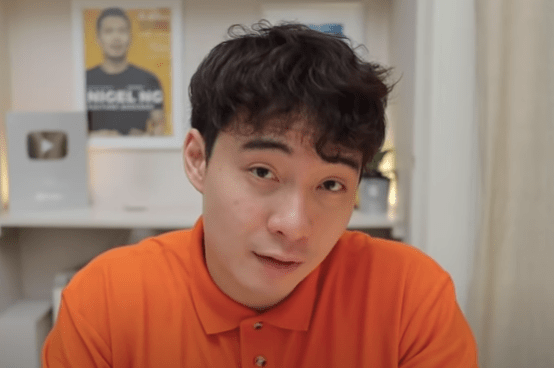
Uncle Roger, the character played by Malaysian comedian, Nigel Ng, has risen in popularity over the last few years and it speaks to the power of what it means to be an outsider. Uncle Roger critiques chefs who make traditional Asian dishes and in turn, shows how these mostly White chefs have used an Asian cuisine they are not familiar with to fuel their stardom. He points out their missteps and inaccuracies as they show their mostly white audiences food they may not have seen before. Some chefs, Asian and White, have now given short remonstrances at the start of their videos about fearing what Uncle Roger will say about their videos. They now know they will be viewed carefully under the eye of Uncle Roger and are a little more careful to tread in an area that they are unfamiliar with. What this does is it gives back power to Asian creators the ability to critique an artform that they curated. Of course, Asian food should not be relegated only to Asian cooks as food is to be shared, but it seems some of these cooks do not give credit where credit is due, and Uncle Roger gives it back.

Nigel Ng is not without controversy in his career as he was denounced for not siding with another Asian creator, Mike Chen, who criticized the Chinese government for their human rights violations. Some saw this as a way for him to maintain revenue in a country that he was trying to gain more favor in. Recently, he made disparaging comments about China in a special that got him banned from Chinese social media. These moves have caused some to question his intentions, but they have not blunted his reach on the chefs who make Asian cuisine. Even Gordon Ramsey is not safe from commentary from Uncle Roger, showing he can be an equal-opportunity reviewer. The fear he strikes into those who make Asian cuisine is fun to watch as those who were formerly very confident in their skills now don’t feel as safe in asserting their knowledge of the dishes they are making. This has allowed for a dialogue on what is proper Asian food and how much it can deviate from the source. Uncle Roger is not the final decision-maker for all Asian food, but he is a good start in reclaiming authority on food that has been used to further careers without any real knowledge of it.

Food is for everyone, but Uncle Roger reminds us that we must pay homage to the source. His ability to draw comedy from a situation where there could be appropriation allows for all to laugh, but also lets creators know that they are on watch. As immigrants who came to another country, we have little left of our culture and identity that was left behind and food is one of our last lifelines to a land we came from. Because of that, food and the preparation of it remains important to Asians and those who have immigrated. Uncle Roger is then informing us that this simply is not a food to be made, but a tradition to be honored.
Remembering 9/11 as a Minority

Remembering 9/11 as a Minority

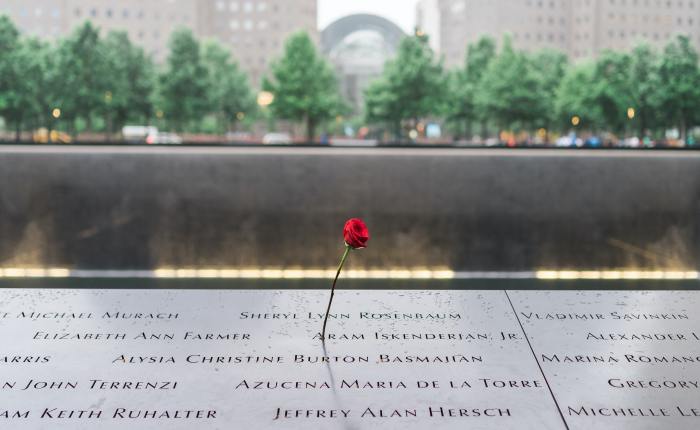
I distinctly remember that infamous day in American history when two planes crashed into the World Trade Center. I was 18 and happy to finally be an adult away at college. I was working in the library early in the morning when my boss came in to tell us that a plane had crashed into the World Trade Center. I was in disbelief and shock. I didn’t know how to react because nothing of such magnitude had ever occurred on American soil in my lifetime. I remember still going to class, but being in a fog as everyone didn’t know what to say or do in the aftermath. People worried about the stock market and my roommate said her father had told her we would be okay as long as everyone stayed calm. I remember seeing Maya Angelou on the news and remembering why? In this moment of great fear, even the news had no idea what to do, so they put someone comforting on. Nothing made sense in that moment.

What was also on my mind was xenophobia. After the shock and worry subsided, my mind wandered to the hijackers. In my heart of hearts, I hoped they wouldn’t be Asian. Because if they were, I knew my life would no longer be the same. When I found out they weren’t, I was relieved, then felt guilty because I knew someone else would be the target of American hate, and they were. I heard stories of neighbors seething and vengeful as they stood outside of Muslim and Indian-born citizens’ homes. I read about a Sikh man who was mistaken for Muslim, who was targeted and killed. And I’d heard that a Hmong teenager had made an off-hand comment that no one Hmong cared that 3,000 people died because it didn’t affect us, and the deep-seated racism that had been so carefully concealed came out. Because of one young individual’s comment, people were emboldened to be racist towards people like me. It seemed this tragic act had resurrected a long-simmering hate that barely boiled beneath many American’s blood and they felt as if they were doing their duty by accosting those they deemed responsible for the fear that permeated their lives.

That is the fate of a minority who lives in a country where the majority of it’s people are White. I don’t blame White people in general, but I hold them responsible for not understanding that as the majority in control, they also control the narrative of who belongs and who doesn’t, and through this experience, I knew I would never belong. I would always be an outsider. I was not free to only mourn what had happened, but as a minority, I knew immediately that there would be consequences and I feared what would happen. For months after, I read about stories of Muslim women who did not wear their headscarf because they feared retaliation, even though they had nothing to do with the crashes. Looking back, I see how unfair that was for me. I knew that even in the midst of a national tragedy, I still had to worry about my own safety and those around me because they would never consider me one of them.

People will always act out of fear because it is who we are. And it’s easier to root our fears in racism than it is to dismantle what we’ve been told and believed all of our lives about who the enemy is. It’s been 20 years and I wonder if we’ve learned any lessons from the past. Are we any different than who we were on that fateful day? I honestly don’t know if we are and perhaps we may never be, but I hope we can change.

Photo by Aaron Lee on Unsplash

An Asian Reviews Mulan: The Live-Action One

An Asian Reviews Mulan: The Live-Action One

As an Asian person who lives in America, I am always excited to see big-screen movies that come out with an Asian-led cast.  Representation matters because minorities should be able to see themselves as leads in movies.  When there is little representation and we are sidelined as sidekicks, we see that our narratives are not as measured as important as others are.  When Mulan was announced, many that I knew were excited about the prospect of a live-action movie with characters that looked like them.  We can actually see ourselves in them as Doua Moua is of Hmong descent.  Simply based on this, this movie helps to celebrate who we are and how we fit into the realm of American movies.  However, the movie falls flat of actually empowering Asians through its narrative.

The movie itself lacks candor, strong relationships, and character growth.  They decide not to include any humor, songs, and magicality in the movie, leaving behind a mostly dramatic movie that lacks any of the charms of the original.  And to add insult to injury, they do not develop Mulan or her relationships with anyone, leaving the audience to not care for her struggle.  In the new movie, she is already a force to be reckoned with at a young age and must shed her lies to reveal her true self, meaning there was no character development.  We do not see her overcome anything and there is no dramatic weight to the film because we are never made to feel as if she has a strong relationship with the romantic lead or her father.  Even the coterie of soldiers do not feel like a band of friends because they do not do anything together.  Although all the actors were Asian, behind the scenes, many of the decisions were made by a mostly White crew, which I felt did not do the movie justice.

The movie had four White writers, and this may have been a reason why the movie didn’t have a strong Asian feel to it.  Does every ethnic movie need to have an ethnic writer behind it?  No, but if there are four writers, why is not at least one Asian?  I think the writers failed to really embellish on what an Asian fantasy movie could be.  They did away with the ancestors and Mushu of the original, but opted for a phoenix that only Mulan could see instead, which held little cultural significance.  There is a lot of wonderful mysticism that is deeply embedded in many Asian cultures and none of this was brought out.  Instead, we got a white-washed version of honor, family, and truth.  The music that is supposed to imbue us with feeling is painfully non-Asian, showing that this movie was really made by White people for White people.  When the writers, the costume designer, the music composer, most of the producers, and the director are all white in a movie that is supposed to celebrate Asianess , how can I see myself in it?