Why are Some Ghosts Doomed to Roam the Earth?

Why are Some Ghosts Doomed to Roam the Earth?

Whether or not you believe in ghosts, everyone understands the concept of what a ghost is. So, what is a ghost? A ghost is an incorporeal being who was previously a human. Most cultures and societies have myths and tall tales of ghosts and what happens to us after death and as such, the concept of ghosts have seeped into the mainstream even though many people don’t believe in them. Putting aside that belief, what makes a ghost a ghost? Who becomes a ghost? And why do some linger longer on this earth than others? Ghosts are simply those who cannot let go of their feelings and it’s their feelings that tie them to the physical realm.

Throughout history, how we have viewed and treated feelings have varied. In 50’s America, feelings were treated as non-existent. They were not valued and had no place in society because they were seen as superfluous. As society has progressed, feelings were given much more importance as we have multiple types of therapists, self-help books, and groups to aid with different issues. Why have our feelings on feelings changed? We’ve come to understand how big of a role they play in our lives and how they affect us going forward. Has this been detrimental to society? With change, there is always good and bad. Acknowledging our feelings opens us up to a wider world of hurt, but it also includes more people into the conversation. This can be seen in how we treat soldiers after a war. In the past, feelings were pushed aside and soldiers knew to stuff their thoughts and feelings aside and live their lives. This led to many unfulfilled lives, but not too much turmoil that everyone saw. Nowadays, we try to at least acknowledge what soldiers have gone through, albeit it’s a work in progress. This allows for them to be heard more, but opening up their feelings leads some to take their lives.

Some have argued that people are just much weaker than they used to be, but this is not true. We have just allowed ourselves to acknowledge our feelings more, which can cause more trauma. However, a world where we can express ourselves is much better than a world where we deny there is even an issue. What does this have to do with the importance of feelings and ghosts? Feelings anchor us to this world if we cannot let them go and the more we accept what our feelings are, the more we will understand the importance of letting them go. Even if you don’t believe in ghosts or reincarnation, believe in the idea that holding something within is not healthy for us. Currently, we are in a flux where we have traversed from never acknowledging our feelings to just opening up to the idea, but eventually, we must all come to the understanding that full acceptance is to understand that we must let all feelings go no matter how much they affect us.

What does that mean? Does that mean I forget about my mother who died so young and never got a chance to say good-bye? No, it means working through those feelings, acknowledging your pain, working through it, and finally accepting the fact that she is gone. To live in the pain is to forever be stuck in that time and become a slave to that hurt. It is a feat easier said than done, but I have come to cherish the time I had with my mother and understand everything we have is not truly ours. It is all a gift, and we must give it back some day. I honor our relationship and live in the joy of my memories of her even though the pain ebbs and flows, but I know I cannot be a ghost stuck in time to that pain. We as a society have a long way to go in working through the process, but we have started, and at this point in time, that is enough.

Photo by Šimom Caban on Unsplash

The War Abroad

When I watched movies like Schindler’s List when I was younger, I imagined what I would’ve done in that era. I would like to think that I would have been on the side of the oppressed and helped to save those who were Jewish, Romani, gay, and different. I think we all would like to believe we would be on the right side of history until we are in the midst of it, such as what is happening in Gaza. I find myself at the same juncture that I wished I were before, and I find complacency. Worst, there are those who fight for the oppressors, and I see why history repeats itself. This particular war is very touchy because it involves two oppressed groups, one of which has been historically oppressed and has experienced the horror of ethnic cleansing in the past. What I find interesting is that those in the Christian right are now taking up for Jews when they once chanted ‘Jews will not replace us,’ and no one bats an eye.

Those in the majority in America have long held negative views about minorities, immigrants, and Jews and have blamed Jews for a multitude of issues such as election fraud, the liberalization of children through media, and the racist trope of them hording money intended for others. However, the very same people who have stood on these lies are now using Jews to fuel their hatred of Muslims and Palestinians. All of a sudden, they support Israel’s right to defend themselves by bombing all inhabitants of Gaza. However, this time around, things are a little different. This has been happening for years, but this time, people are not so quick to believe the media and what they are told. Because of social media, they are able to see other stories and many people are awakening to the idea that Palestinians are the colonized people who are being exterminated from their land. The tide is changing, but at what cost? The cost of Jewish and Muslim lives hang in the balance.

And what can we do on this side of the world? It’s hard to voice even an opinion when either side states that you are not supporting them. However, you can support the people of Palestine without hating those of Jewish descent, for they have nothing to do with the Israeli government. When this war quiets down, Jews will still be vilified by conspiracy theorists and Muslims will still be ostracized by many Christians. Whatever your views, don’t let them be co-opted by the majority to fuel their hatred of someone different than them. There is little I can do to help the oppressed or change history, but I know which side of history I’ll be on.

Why I’ll Never Forgive Some People And It’s Okay

Why I’ll Never Forgive Some People And It’s Okay

I have been wronged by people close to me in my life. Betrayed by family members. Let down by friends. Taken advantage of for my kindness. These things happen as people constantly test boundaries with you. It is up to us to reinforce the boundaries that we established and sometimes, that means not forgiving someone. But wait! Aren’t we supposed to forgive? If not for them, for our own sake? Doesn’t forgiveness mean we are good and just people? Not always. Not everyone deserves forgiveness and that’s okay. Even if they did deserve it and you’re not ready yet, that does not make you a bad person. You can also forgive them in one way and never forgive them in another.

I’ve had a few exe’s who I left on bad terms and although I may get upset about what transpired in the past, I have learned to forgive them as persons, but never as boyfriends. What does that mean? I recognize them as flawed human beings who were trying to do the best they could, coping with the traumas from their childhoods, and trying to find a love that they didn’t know how to hold on to. I can forgive them these things because they didn’t know better. However, I can never forgive them as boyfriends because if I did, that would mean I would be able to return to them in the same capacity. There is a finality in that decision because that particular relationship is over as I can’t forgive the things done in it, but I can continue a different one based on friendship.

Is it bad to never forgive them in any capacity? Some people preach forgiveness for our souls, but that’s not what forgiveness is. Forgiveness means letting it completely go, but it’s okay to reinforce our boundaries and say we don’t let that ish slide. We need to learn to protect ourselves first before we worry about how we affect others. That doesn’t mean we can’t learn to understand the person and why they made the decisions they did, but just because we have compassion for them doesn’t mean we would let them back into our lives. Forgiveness is a complicated thing, but if we view it as boundaries that serve to protect us, we should then honor our forgiveness and not dole it out frequently.

I understand why the people in my life did the things they did. I have compassion for them as human beings and as a flawed person myself who is constantly learning, I know we are on the same journey, but I also recognize I don’t need to forgive their actions if they have crossed my boundaries and that’s okay. At the end of the day, if you are at peace with the decisions you have made, you have made the right ones. If you question if you have hurt others with your decisions, remind yourself of what your boundaries are. I mourn the loss of the relationships that I cannot forgive, but I hope you the best in your journey where ever you are. I hope you get there some day.

Why Don’t We Care About Each Other?

Why Don’t We Care About Each Other?

There is a housing market boom right now, where prices are skyrocketing. The house we bought in 2018 is now valued at an extra $30,000. I don’t know if we could’ve afforded the house then if at that price. Then, I decided to look at what one bedrooms were renting at in our area and saw them going for $600.00. I paid $450.00 about 5 years ago. Of course, I have to expect that prices will go up, but I worry still. I worry about twenty-something me that worked two part-time, minimum-wage jobs after she moved home after the 2008 recession. How could she have afforded rent for what she was earning? Would she have been able to save anything? She already didn’t have that much to begin with. And I worry about people like her who are currently in that situation.

Every day, I see new apartment buildings made of concrete and glass rise from the ground and I know they were not designed for those who are living near the poverty line. Instead, the poor have to rely on Section 8 housing, which some see as a hand-out. What the detractors don’t realize is that landlords must agree to the vouchers in the first place and many do not. Where does this leave a city that is growing and prospering, but leaving its poorest behind? I myself live very comfortably and now have a great job that I love, but still, I worry about that girl that I used to be. She wasn’t lazy. She didn’t take hand-outs. She worked her ass off and barely made it. It’s easy to generalize the plight of others when we don’t personally know them, but sometimes, what they genuinely need is help.

Housing is a crucial element of life and we have been reduced to the haves and the have-nots. The haves scorn the have-nots and tell them to get a job, get a degree, work harder, and to get off employment, while the have-nots cannot wait until they can tell those that come after them the same thing. We, as a society, are sorely broken and it’s much harder to fix than just policies and laws. The policies that are enacted may help those who need it, but it does not help those who continue to feel that those who are poor deserve it. What have we become when we don’t care about hungry children and homeless parents? There is a problem and it is us. It is our entitlement.

Entitlement is not the belief that we are owed housing, health care, and mental health, but rather, the issue is that we think we’re entitled to the wealth we’ve gained and earned, making us feel as we belong in a different caste. Entitlement is asking where our tax payer money is going to when it could be helping our next-door neighbor who just lost her job. It is telling others to pull themselves up by their bootstraps when we forgot the struggles we had to get where we are. It’s in the way we talk about those who need help and those who want to help them. We say they are bottom-feeders and leeches, giving them no sympathy. When we differentiate ourselves from them, we feel entitled to our own situation and dehumanize them in the process.

If we don’t care about each other, there will be no one left to care about who we are. What is our legacy going to be at the end? What will they say about us? They were selfish until the very end. The human race died out because they couldn’t pull themselves up by their bootstraps. The bootstraps were never the problem. The system is most likely to blame. However, it all comes down to the common denominator of caring for others that are not us. If we don’t realize that we’re all in this together, we’ll see ourselves splinter more and more and we’ll be the ones left behind.

Photo by Jordy Meow on Unsplash

Traditions vs Culture

Traditions vs Culture

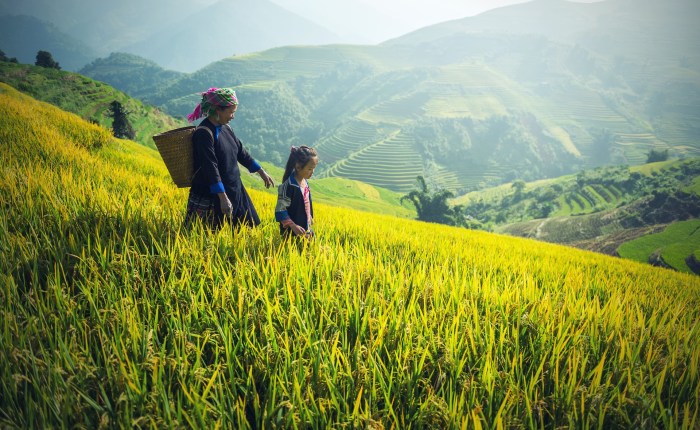
I’ve heard a lot of talk of what it means to carry on traditions and how that relates to our culture, but I think a lot of people are confusing the two. Traditions mean acts, words, ceremonies, and more that have occurred regularly throughout our history. Culture is an ever evolving way of how we view ourselves and doesn’t necessarily need to be rooted in our past. I am a second generation Hmong refugee, who was born in America, and really dealt with two separate cultures: my ethnic, Asian heritage and the current mid-western landscape that I live in. Being a fish out of water is already an experience in and of itself, and some find themselves gravitating to one side or the other, which results in confusion and a murky reflection of who we see ourselves as in the future.

But I digress. What concerns me is how we hold on to old traditions because we think if we don’t, we are losing our culture and what it means to be who we are. If we no longer practice Shamanism, steal brides, buy our brides, or shun our women, does this mean we aren’t Hmong anymore? The bride price is an especially sticky issue because some argue that it is not a price on the girl’s head, but a debt of gratitude paid to her parents to honor them for raising her. And that may well be the case in many situations, but that does not end up happening when tensions arise. Husbands and their families use the bride price to manipulate and accost their brides, for they know it would cause her irreprehensible harm if she were labeled a bad wife and returned. Yes, there are some Hmong people who don’t do this, but the fact of the matter is that the bride price is a patriarchal tool that can be used to control women.

So then we ask what do we do with this tradition? Do we let it die like the words our children no longer know to speak? Who are we if we are not our traditions? Traditions are rooted in the past, but culture does not have to be. We can choose to change who we are and what our children experience. Our culture is what we expect of our young boys when they date our young girls. It shouldn’t be turning a blind eye when your older uncle goes to Thailand to marry a barely legal girl. It shouldn’t be telling our women to stay in troubled marriages simply because they will be ostracized. It shouldn’t be letting others think it’s okay to beat their wives because they were paid for. That’s what happened recently, when a Hmong wife went live to the act of her husband beating her. The most reprehensible thing that happened afterwards was that one of the husband’s female relatives said they should be allowed to hit her up to 10 times because they bought her.

This is currently what our culture is, but it doesn’t have to be what it can be. I was part of a Hmong women’s group where countless women poured their hearts out about how they were mistreated by their husbands and their families and it broke my heart that we are still tied to the very traditions that our mothers and our mother’s mothers were. They had no agency in their lives and relied on the social support of their husbands. They were shunned if they were divorced or their husbands died. Their children could be taken away from them if the other side wanted. I always thought that these were things of a bygone era, but the group forced me to realize that we are no different than our past. My mother’s mother was a second wife, tricked into marrying my grandfather by his first wife. When he died, he left his family in shambles because they no longer had a man protecting them. Because of this, my mother longed for legitimacy and a family, willing to undergo all sorts of trauma at any cost to be a wife.

My mother was always an angry woman. Someone who was short with us and didn’t show us affection. I always knew she didn’t love us, but I now understand why. She had to reduce who she was to please her husband and the society she lived in. In doing so, she killed her own happiness and who she was. To change our culture, we must recognize that our society was set up to benefit only the men. They are the only ones with any real sense of agency and ability to change their lives without impunity. We must understand that this cannot continue. We can accept that these were our traditions, but we don’t have to accept that they will continue to be a part of our future. And so I ask, what does it mean to be Hmong? Who are we if we are not our traditions? We can be kind. We can be understanding. We can be inclusive. We will always remain Hmong, but we can be better.

The Power of Unwinding Down

The Power of Unwinding Down

Perhaps it is because we think we are too important or not important enough, but we have forgotten the power of what it means to unwind. What is unwinding? It simply is deflating. Powering down. Relaxing. It is a forgotten artform because we’ve been so focused on trying to achieve success that we forget to breath. To simply be. Unwinding down from a long day looks like taking a few minutes for yourself and simply vegging out without any electronics or distractions. It means unpacking what has happened to you that day and what it means to you. Unwinding means connecting with yourself for a moment before you slip into your other life. Why is it important? It’s important because it’s the time we reserve for our own mind’s sake. We go through so much trauma without processing it that we don’t know how to process every day transgressions. They matter, too and we matter.

What happens if we don’t unwind? If we don’t unwind, it all simply builds up and suddenly, we find ourselves behind a wall of denial, believing we are okay when we’re not. We don’t know how to process what happens to us, so we simply don’t. No one was taught us what it means to process and we can’t even comprehend what it means to even do it. If we don’t even know how, who do we become but these shells of people who hold in all their hurt and pain and break at a moment’s glance simply because we don’t know where the pain goes. It may be too big of a mountain to climb to tackle extremely traumatic events, but if we don’t even have the tools to focus on the small ones, we’ll never even get to the big ones.

So how do you start? Recognize that your experiences are valid and you are worthy of retrospection. When you run through the day, ask yourself how it made you feel and how it affected you. If you did something that you weren’t supposed to do, learn to forgive yourself. Once you start seeing how this affects your well-being, you’ll be able to recognize that taking a moment for yourself is not selfish, but needed. Take a moment to be present in your life and acknowledge who you are and where you are at. We spend so much time focusing on getting somewhere else or being someone different that we forget to nourish who we are right at this very moment. Unwinding simply means spending a second with yourself and enjoying it.

Photo by Nadi Whatisdelirium on Unsplash

Who is responsible for watering this plant?

So we have this plant in our office that is rigged up with a water bottle to self-water when needed.  It got moved to my window and I let it be known that it was not my job to take care of this plant and I washed my hands of it.  Over the last few months, it has slowly been dying and withering away, but when I look at it, the water bottle is half full, so I thought that it was fine.  Still, I said it’s not my problem because I already said I refused to take care of it.  Last week, the dying leaves littered the floor around me and I was forced to clean it up.  I thought that the water bottle may be faulty and poured water into the pot and when I did, the soil soaked it up and the water bottle started to actually leak out water.  I realized then that the soil was so dry that the bottle couldn’t even properly work.  I feel this is a good analogy for what’s happening right now in our country.  We never said that it was our personal responsibility to take care of police brutality and racism against Black people, so we didn’t.  It happened, but it was just there and we didn’t acknowledge it until it started dying on our very doorsteps.  And when we looked into the issue, we started to realize that we were blaming Black people for not growing when it was really the system that was failing them.  Perhaps we can stop refusing to acknowledge the root of the problem and what lies underneath because it actually does affect all of us.

Change Comes at a Price

alexander-krivitskiy-DHPDsHOnTpg-unsplash

The process to tackle issues that you’ve been battling your entire life is terrifying, nerve-wracking, and anxiety-producing.  The fact that you have to face these demons from the past may cause us more hurt than we’re willing to deal with right now, so what do we do?  We push it away so we can remain sane for a moment.  We deny it so we don’t have to deal with it.  We use drugs, sex, and food to self-medicate.  We end up lying to ourselves because we can’t face the truth.  When we refuse to ever look at the underlying issues, we become a shell of who we once were.  We are trying to protect who we are now from what happened to us before, not realizing that we are damaging ourselves more in the process.  However, change comes at a price

Change is messy, painful, and scary.  We must be ready to face change if we want it, but realize it is not in the cards for everyone.  Change can only be done if we’re in a relatively safe place.  If we are constantly in a state of flux such as homelessness, being battered, or on drugs, change will be very hard to come by.  For some, change means confronting terrible things done unto them that they must revisit, bringing even more shame, anger, and fear, so they don’t change.  We shouldn’t judge those that can’t change because we don’t know what they are going through.  If someone never chooses to change, that is their decision and we must make peace with it.

But if they do decide to change, they will revisit all the hurts they have experienced before and bring back the ghosts that have haunted them all their lives.  This painful experience may cost them relationships or undue hardships, but that is what comes with change.  There are a million of us out there who refuse to change or acknowledge our pains and as such, we continue on, carrying this hurt and trying to cover it up, only for it to spill out in our lives in ways we could not predict.  What we don’t realize is that even if we don’t face the hurt, the hurt will always be there right beneath the surface and if we don’t do anything about it, it will change us so much that we won’t recognize who we are anymore.


Photo by Alexander Krivitskiy on Unsplash

The Fear of the White Van

dan-gold-5WJzOWFUdyk-unsplash

An article recently came out about white van posts on Facebook that were causing parents to fear for their children’s safety.  According to the article, there was little proof to back up these claims bu tthe fear that these posts created caused mass chaos online and real hysteria in real life.  I’ve seen the shared posts myself, telling an elaborate story about how someone evaded being kidnapped or trafficked to the relief of the poster, but played as a cautionary tale to those who shared and read it.  When posts like these cannot be verified, people believe in the truthfulness of the poster and would not question why someone would post something untrue.  In their sense of duty to warn others, they share the post and continue to propagate unfounded fears.

In one post, someone talks about how they think were almost tricked into being trafficked, but didn’t get out of the car, foiling the perpetrator’s plans.  My question is ‘how do you know the reason they were taking you was for trafficking?’  What if they just wanted to kill you?  But trafficking is a buzz word and to include that in a post will get more shares and likes even though that is not how most trafficking cases occur.  Most victims of trafficking know their abusers and a large percentage of them may be at-risk youth who can be missed, involved with drugs or selling drugs, or leading lives that would put them at risk for trafficking.  There are a few instances where girls are taken without any of these attributes and trafficked, but even in those cases, they knew at least one of the persons that trafficked them.

The point is that no one is questioning the veracity of these claims that are striking real fear into everyday people and when they do, they are met with a wall of anger because many feel as if the post, whether true or not, are simply trying to inform people.  The truth is, if we blindly share those posts without really thinking about what we are sharing, we are contributing to a larger problem that creates fear and distrust for our children, our neighbors, strangers, and ourselves.  When we believe these unfounded lies, we start to live as if we must guard ourselves at all times against potential crimes that may never materialize.  These types of activities are definitely happening in the world, and we should be vigilant about them, but we shouldn’t live in fear of things that your friend shared but didn’t even read through.

Photo by Dan Gold on Unsplash

https://www.cnn.com/2019/12/04/tech/facebook-white-vans/index.html